
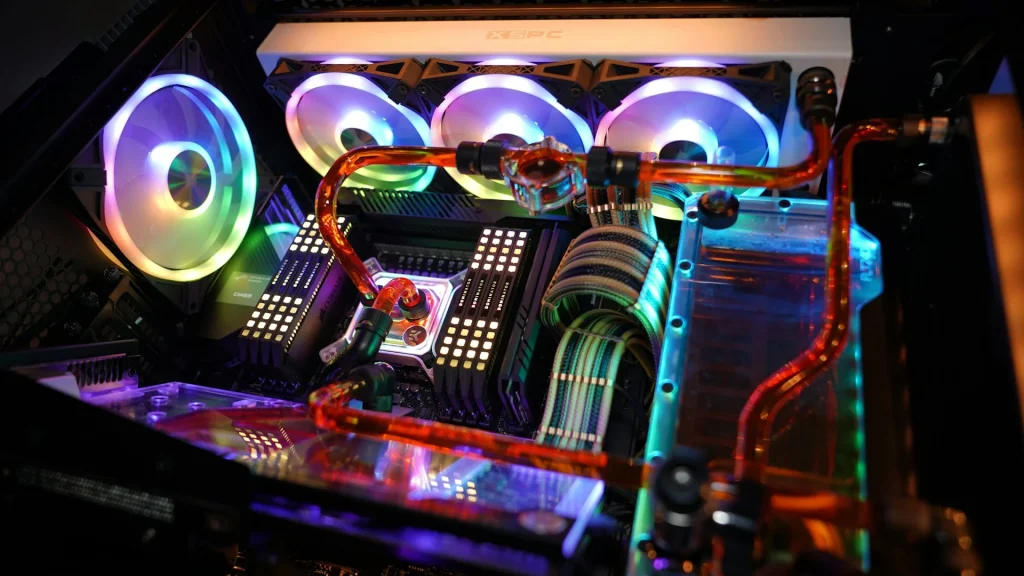
A hardline loop is measured in millimeters. A bend that is two millimeters off throws the entire run out of alignment, and the tube is cut again. This is why we bend every tube by hand rather than relying on pre-formed angles: each run is measured against the actual chassis, not against a drawing.
The process is methodical. Measure the run, mark the tube, insert the silicone mandrel to prevent collapse, and heat the section evenly with a heat gun while rotating the tube. When the acrylic reaches the right temperature, the bend is made against a jig, held until it cools, then dry-fitted. If the angle is off, the tube is discarded and the process starts over.
The Bend
Precision matters beyond appearance. A true bend keeps fittings square to the chassis, avoids stress on O-rings, and leaves the flow path clean with no kinks. In the Hotwheel, the circular chassis makes this harder: every bend is compound, and no two tubes share the same angle. Each unit takes days of bending alone.
The result is a loop that looks machined rather than assembled. That is the difference between a build and a build you can sign.
SIGNED BY THE HANDS THAT BUILT IT
CGP Team