
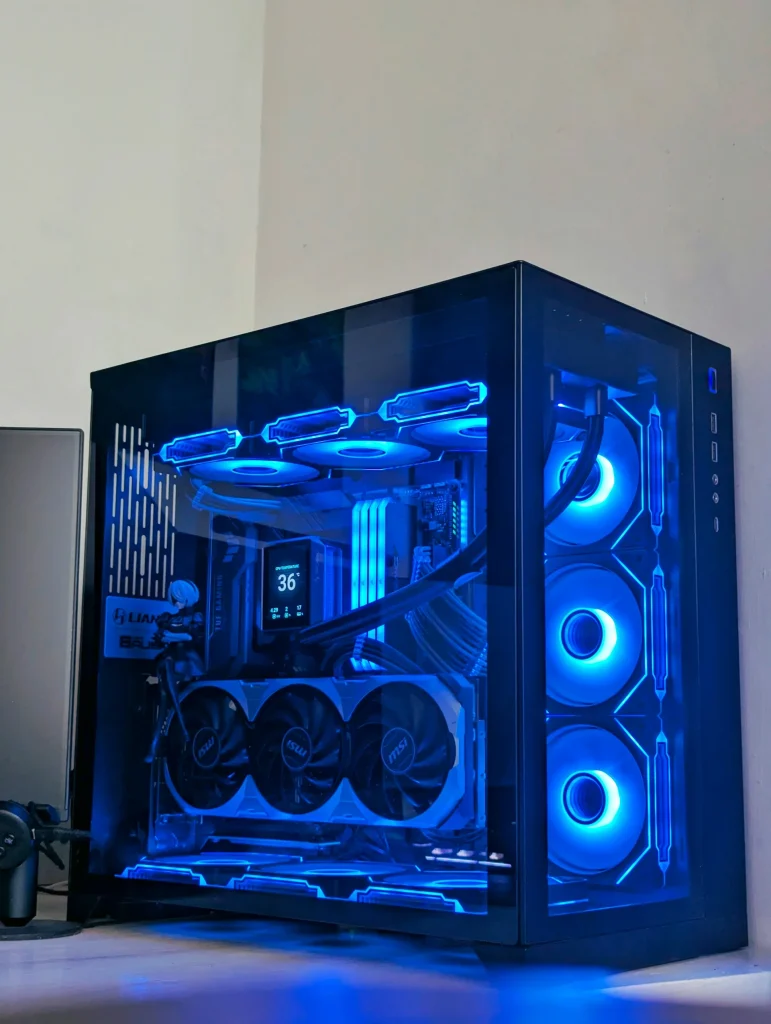
A GPU water block looks like a simple metal slab, but it is the most engineered part in a custom loop. It sits on the hottest component in the system — a modern flagship GPU can draw over 450W — and every detail of its design decides whether the card runs cool and quiet or hot and loud. When you choose a block, four things matter: coverage, cold plate, jet plate, and pads.
Full-Cover vs. Universal
A full-cover block cools the GPU core, the VRAM, and the VRM in one plate. A universal block cools only the core and leaves the memory and power stages on their original air cooling. Universal blocks are cheaper and fit more cards, but for a 450W flagship, the VRAM and VRM generate serious heat of their own. In a CGP build, we use full-cover blocks — the card is in the loop, so everything on the card should be in the loop.
The Cold Plate
The cold plate is the surface that touches the GPU die. Copper is the standard: it has the best thermal conductivity of any practical material. Nickel-plated copper adds a corrosion-resistant layer that protects the plate from aggressive coolants and keeps it looking new. Bare copper works, but it oxidizes and reacts with some fluids. We spec nickel-plated plates on every build — the small thermal cost of the plating is worth the longevity.
Jet Plates and Fin Density
Inside the block, a jet plate directs coolant at high velocity onto the hottest point of the die, and the micro-fins underneath multiply the surface area the fluid touches. Higher fin density means more surface area — but it also means more flow restriction, which demands a stronger pump. A block is a system, not a part: the pump, the fins, and the jet plate have to be matched. That is why we test every block against the pump we pair it with.
Thermal Pads Matter More Than You Think
VRAM and VRM contact the block through thermal pads. Cheap pads dry out, crack, and lose contact within a year, and the memory runs hot long before you notice. Quality pads compress evenly and hold their performance for years. It is a small part with an outsized effect on longevity.
Compatibility Is Non-Negotiable
GPU blocks are model-specific. The same GPU chip ships on different PCBs — reference and custom — with different component layouts, and a block made for one will not fit the other. Before any build, we check the card against our GPU compatibility database, which lists the exact block for each model. Never assume a block fits because the chip name matches.
Browsing blocks? The shop carries the GPU water blocks we actually use in builds. If you are unsure which one fits your card, ask us — compatibility is what we check first.
SIGNED BY THE HANDS THAT BUILT IT
CGP Team